Saethre-Chotzen Syndrome


Description
Saethre-Chotzen syndrome is a rare deformity that is closely related to Crouzon syndrome and both are thought to have similar genetic origins.

Characteristics
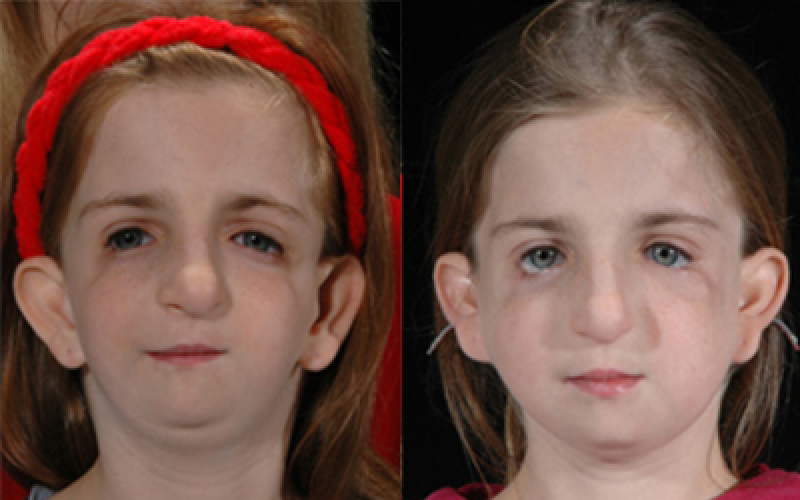
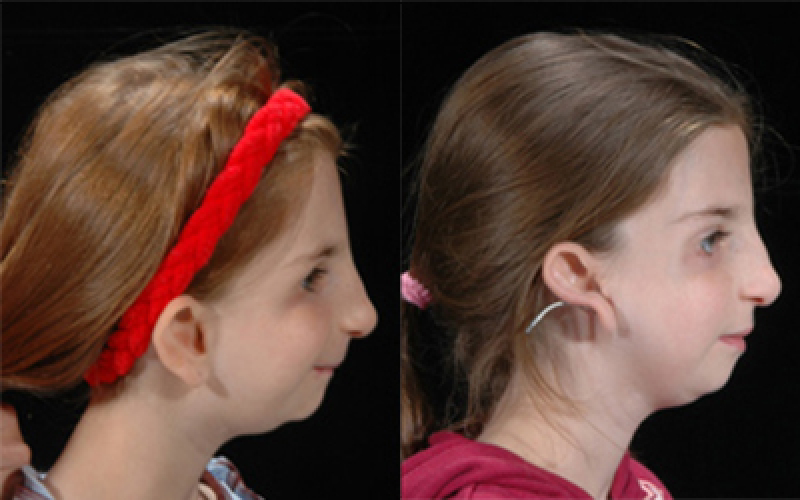
Saethre-chotzen syndrome patients have some distinct features:
  • Craniosynostosis most often of the coronal and lambdoid, and occasionally sagittal sutures
  • Underdeveloped midface which can be interpreted as either receded cheekbones or exophthalmus
  • Ocular Proptosis which is a prominence of the eyes due to very shallow orbits. The patient may have crossed eyes and/or wide-set eyes.
  • Low set hairline
  • Bilateral congenital ptosis or drooping of the upper eyelids
Some other features commonly seen in these patients are visual disturbances related to an imbalance or absence of the muscle that moves the eyes which usually requires surgery to correct. Also, ptosis of the eyelid is prevalent in these patients. There may be hearing loss due to recurrent ear infections. The mental capacity of these patients is usually in the normal range, however some mental delay has been reported.

Causes
The cause of Saethre-Chotzen syndrome, like many of the other syndromal craniosynostosis, has been found to be linked to a gene alteration. Their occurrence is sporadic and extremely rare. Usually, the parents are not affected and the risk for future children of that couple is minimal. The offspring of an Saethre-Chotzen patient have a 50-60% chance of inheriting the syndrome due to the dominant characteristics of this gene.

Expectations and Treatment
Children with Saethre-Chotzen syndrome generally have normal intelligence although occasionally some reduced intellectual capacity can be seen. Because of the underdeveloped midface and high arched palate, nasal airway obstruction is not uncommon. Unusual resonance and speech patterns can develop from either the small nose, the high arched palate, or the malocclusion. A cleft palate can be associated with this syndrome and is repaired as it is with any other cleft patient. As with other cleft patients, there can be hearing problems due to recurrent ear infections. These patients may also experience difficulty with their vision. The presence of ptosis of the eyelids and the imbalance of absence of some of the muscles of the eye can contribute a great deal to this problem. Surgery is often required to correct this malformation. With proper treatment, these patients can be productive and active members of mainstream society.

Multiple staged surgery is the general treatment plan for patients with Saethre-Chotzen syndrome. In the first year of life it is preferred to release the synostotic sutures of the skull to allow adequate cranial volume to allow for brain growth and expansion. This procedure may need to be repeated in the life of the child. In addition, depending on the severity of the skull deformity, this procedure may be done in one stage or two stages. If necessary, midfacial advancement and jaw surgery can be done to provide adequate orbital volume and reduce the exophthalmus and to correct the occlusion to an appropriate functional position. Eye muscle surgery often needs to be performed by a pediatric ophthalmologist to correct the imbalance in the muscular structures of the eye as well as the ptosis of the eyelids.