
"*" indicates required fields


Down in Syndrome Treatment Dallas, TX
Down syndrome is the most common congenital syndrome. Parents of children with Down syndrome can take comfort in knowing they are receiving world-class care from the physicians of the International Craniofacial Institute in Dallas, Texas.
What Is Down Syndrome?
Down syndrome as a disorder occurs at birth. Down syndrome is a chromosomal disorder named for the man, Langdon Down, who first noticed and notated the disorder in his records and to other doctors in the field in the 1860s before doctors and parents fully understood the disorder.
How Do People Inherit Down Syndrome?
Down syndrome is not caused by anything the parents do or do not do before or during a woman’s pregnancy. Down syndrome occurs because of a gene mutation.
Down Syndrome Before and After Gallery
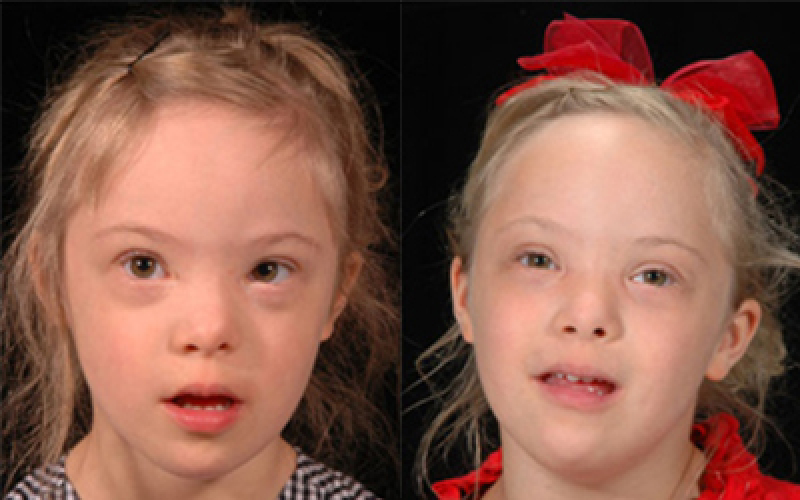
Again, the extra chromosome is not the result of anything the parents did or didn’t do when the mother became pregnant, but there is a link to older parents and Down syndrome. More babies with Down syndrome are born to mothers who are 35 and older. There are also more babies with Down syndrome born to fathers who are 42 and older. Usually, males with Down syndrome do not end up having children, so research on the commonality of those individuals fathering children with Down syndrome is not up to date. Some females with Down syndrome have children, but these women have a reduced fertile rate, in general.
How Common Is Down Syndrome?
Down syndrome is the most common congenital syndrome among infants. It occurs in nearly 1 out of every 650 to 1,000 births.
Down Syndrome Characteristics
There are many notable characteristics among individuals with Down syndrome. First, they tend to have round, flat faces, and their chins may be especially small. They may also have skin folds on the inside corners of their eyes, and their eyes may slant upwards. White spots on the eyes and a low bridge on the nose are other characteristics.
What Is the Cause of Down Syndrome?
The true cause of Down syndrome is simply a gene mutation. The 21st chromosome is supposed to divide into two parts, but when someone develops Down syndrome, their 21st chromosome has divided into two parts. The third part may be a complete or incomplete replica of the initial chromosome.
Down Syndrome Treatment
There are several treatment options for Down syndrome, but it is usually not a medically threatening syndrome. There are some areas that can be improved, such as sleep, speech, and airflow. The growth patterns in the body that start when an individual with Down syndrome is an infant will continue into adulthood.
Why Choose International Craniofacial Institute?
The International Craniofacial Institute in Dallas, Texas is a leading institute for the accurate diagnosis and quality treatment of Down syndrome and other syndromes and conditions. Our institute was founded in 1971 by Dr. Kenneth Salyer, a surgeon. Today, the institute is organized and led by the director, Dr. David G. Genecov. Dr. Genecov operates the International Craniofacial Institute as one of the nation’s most prestigious centers for palate repair, craniofacial repair, and cleft lip repair.
At our institute, we train doctors and surgeons from all over the world. In addition, our doctors have treated more than 17000 patients. These patients come from the United States, as well as other countries.
To alter and correct craniofacial abnormalities and difficulties, a high skill set is demanded, and we have that here. Our doctors, surgeons and the rest of the staff are extremely knowledgeable and always up to date on the newest methods of diagnosis and treatment. Among all of our employees, we have decades of experience working with different syndromes, including Down syndrome.
If you have a child or another family member who is suffering from a genetic syndrome or has a cleft lip, cleft palate, or craniofacial complication, the staff at the International Craniofacial Institute can help. Contact us today to talk with the doctors and staff about your options and how we can help.


